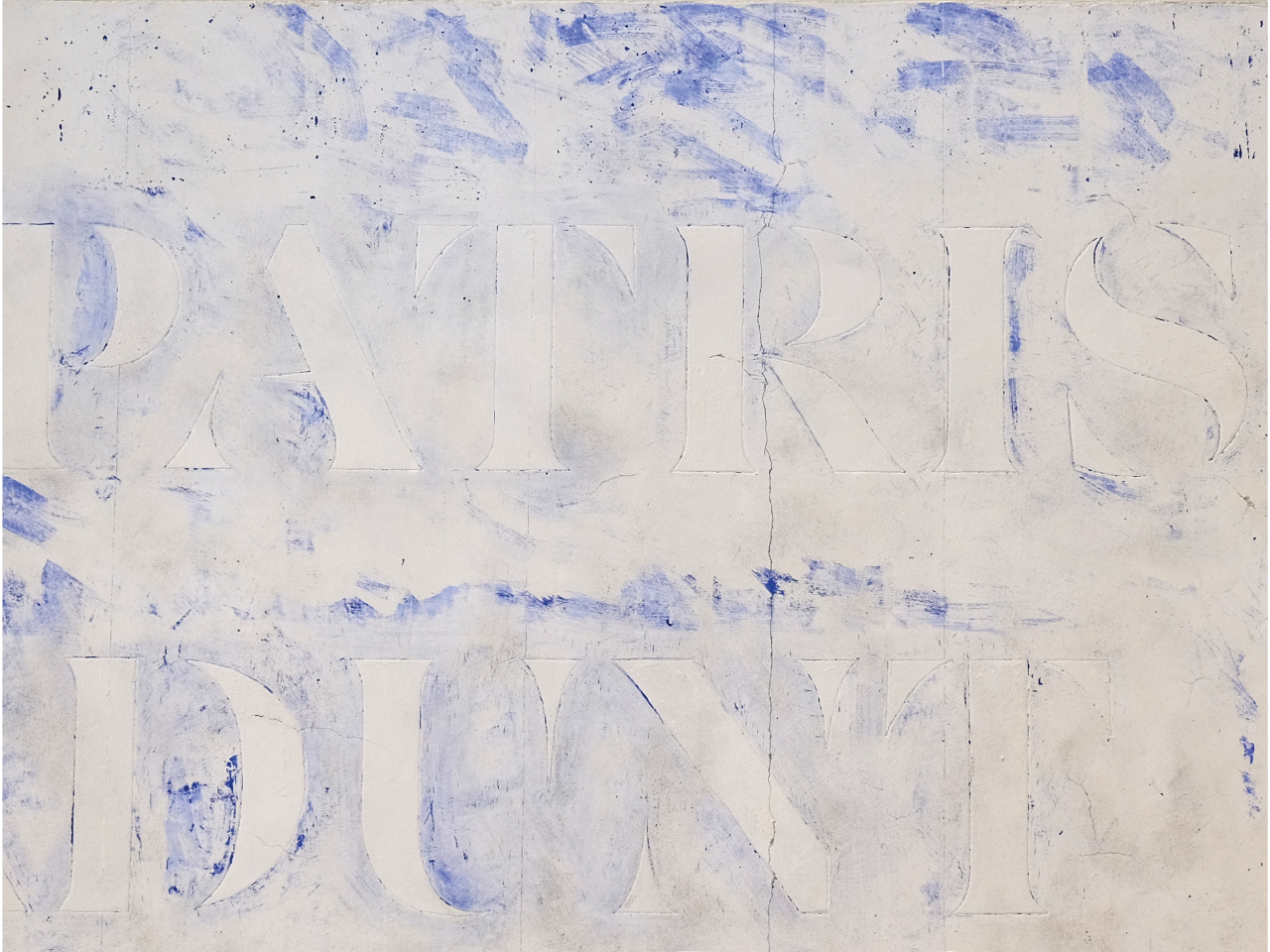
Strappo: The Patriarchy Does Not Fall by Chance
Mar Arza reflects on the patriarchal structures embedded in our society. The work leaves its mark: even what is torn away reveals what persists. How many more layers must we remove to neutralise its impact and its presence?
+ Strappo
An intervention by Mar Arza at the MNAC
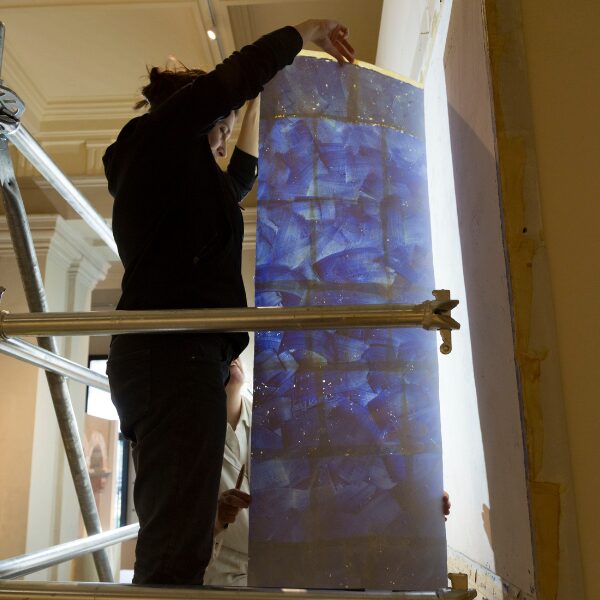
The strappo technique was used to detach mural paintings from churches in the Pyrenees in order to transfer them to the exhibition spaces of the MNAC, where these unique, iconic works are displayed today.
Although the aim was to preserve them, the gesture remains extractive: the skin of a liturgical building was removed and taken to a neutral, museum setting. In the process, deep layers, traces and shadows of what was once there remain.
Mar Arza draws on this historic technique to intervene at the heart of the mural‑painting galleries. She presents a detached fresco that reveals a phrase: ARCUS PATRIS FORTE NON CADUNT (“The father’s arches do not fall by chance”).
From this wound emerges a latent message about power. The work shows how art can conceal or perpetuate certain structures, but it can also make them visible. Like a ruin, it speaks to us of what falls and of what endures.